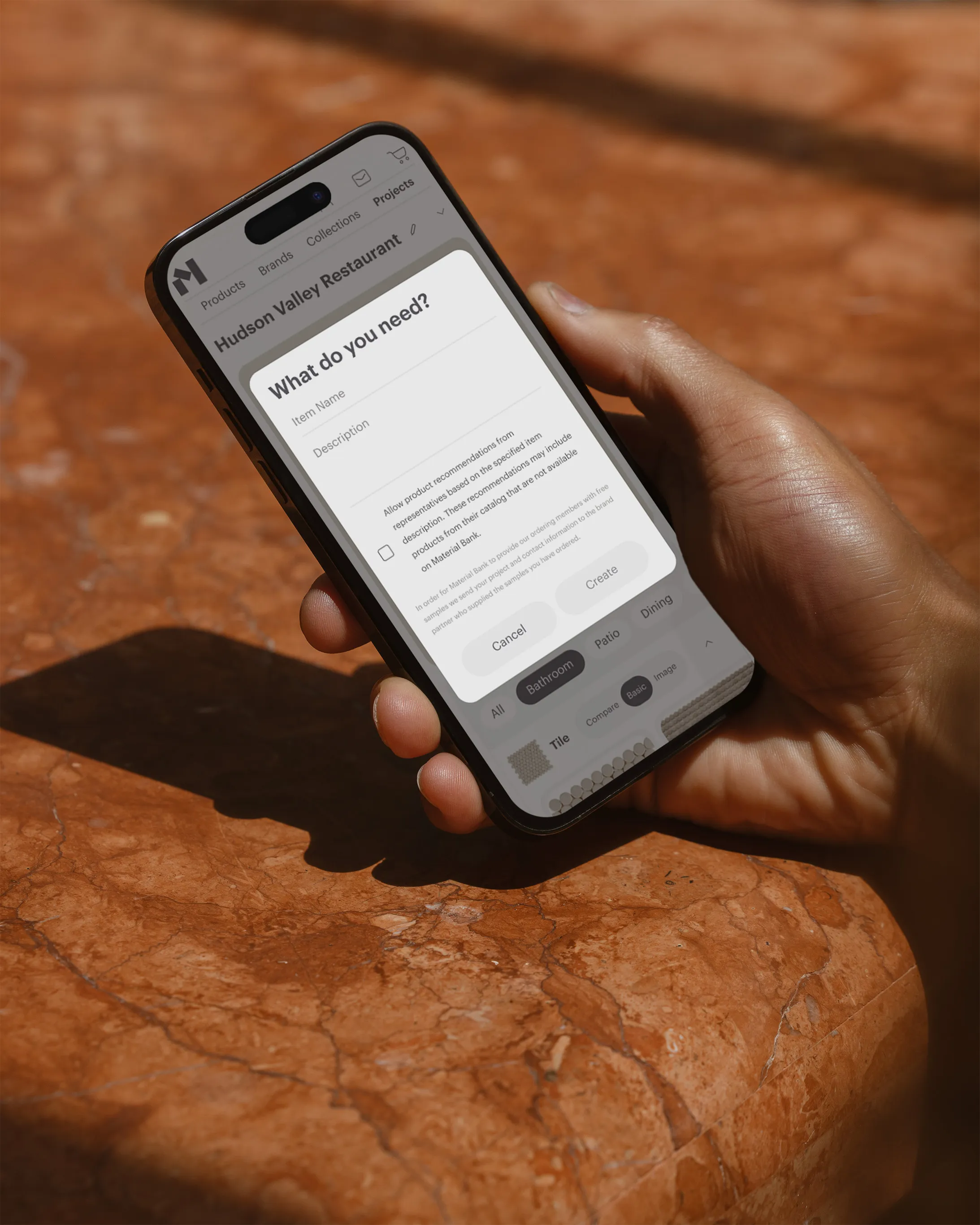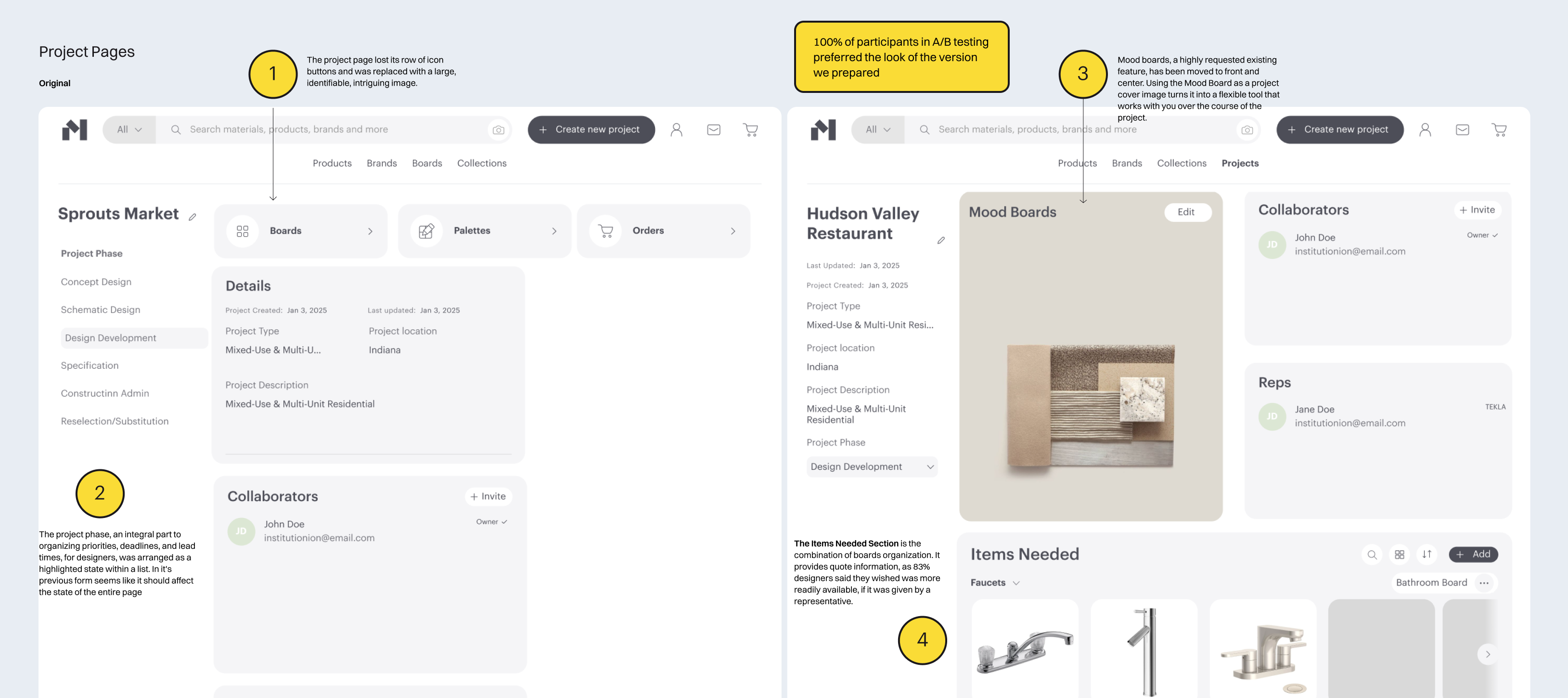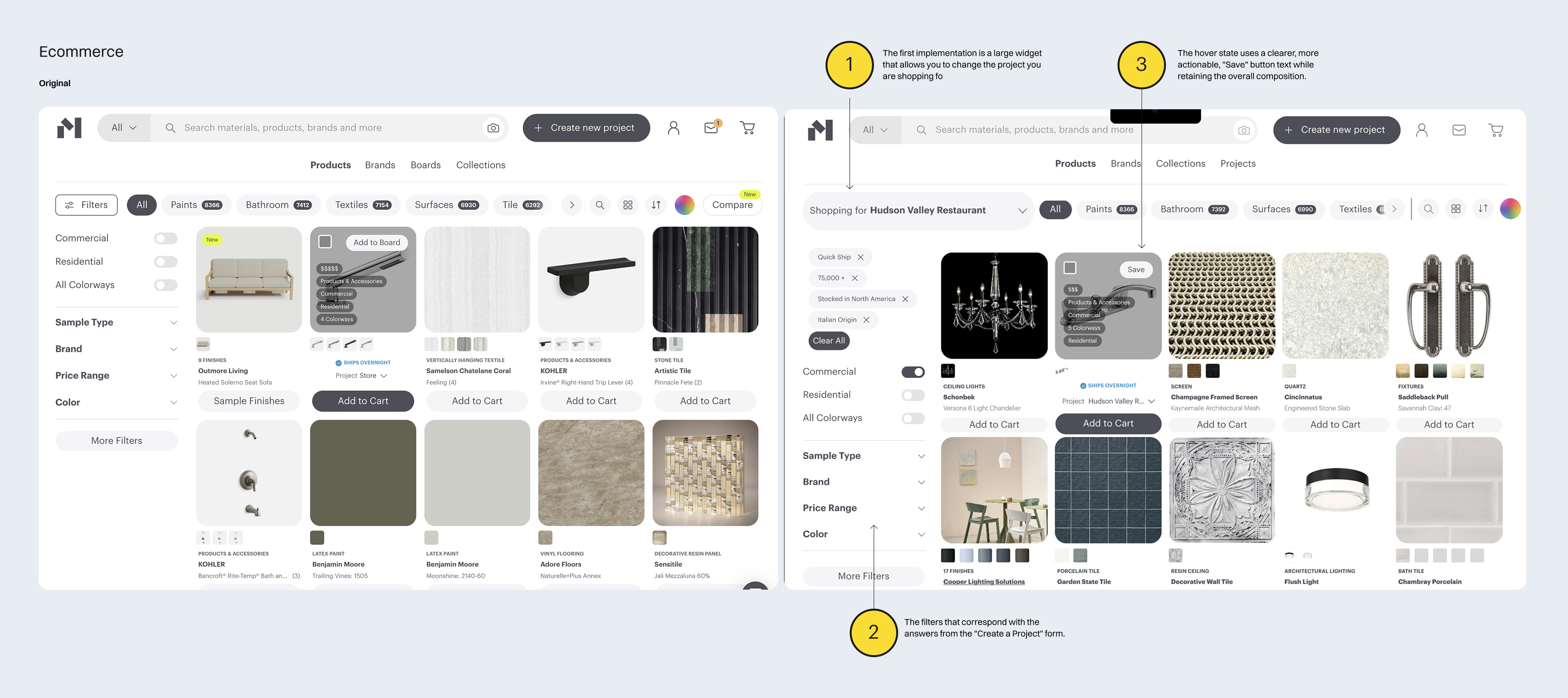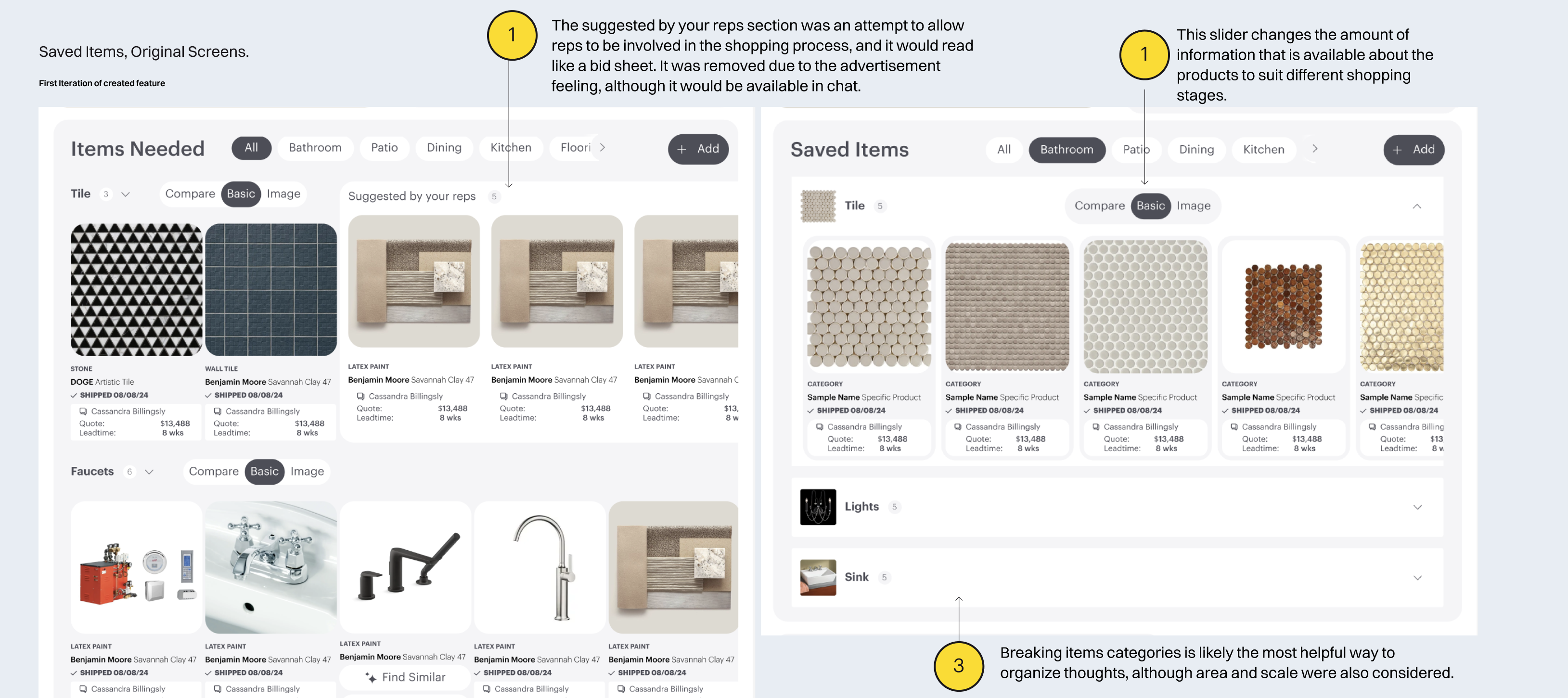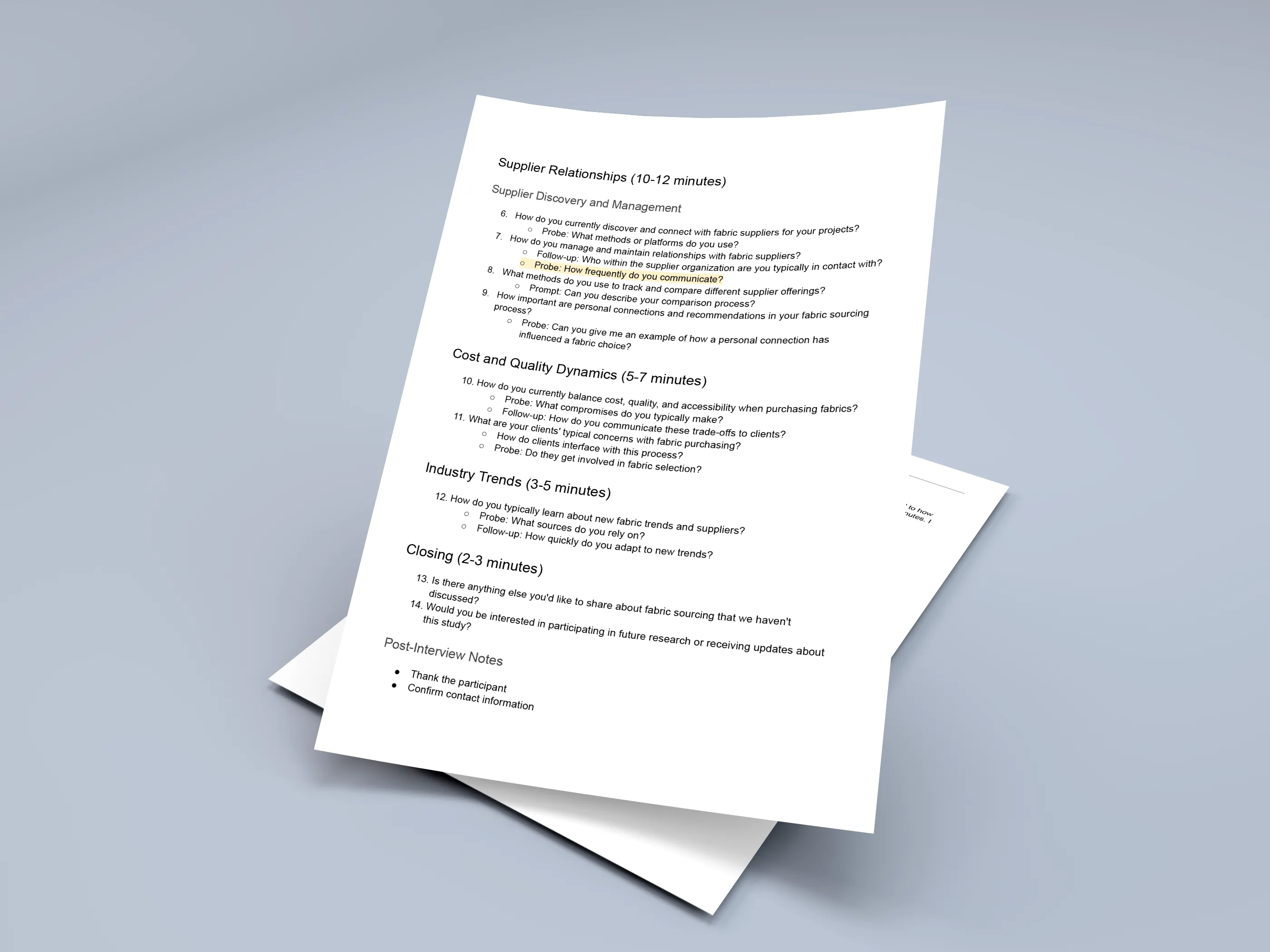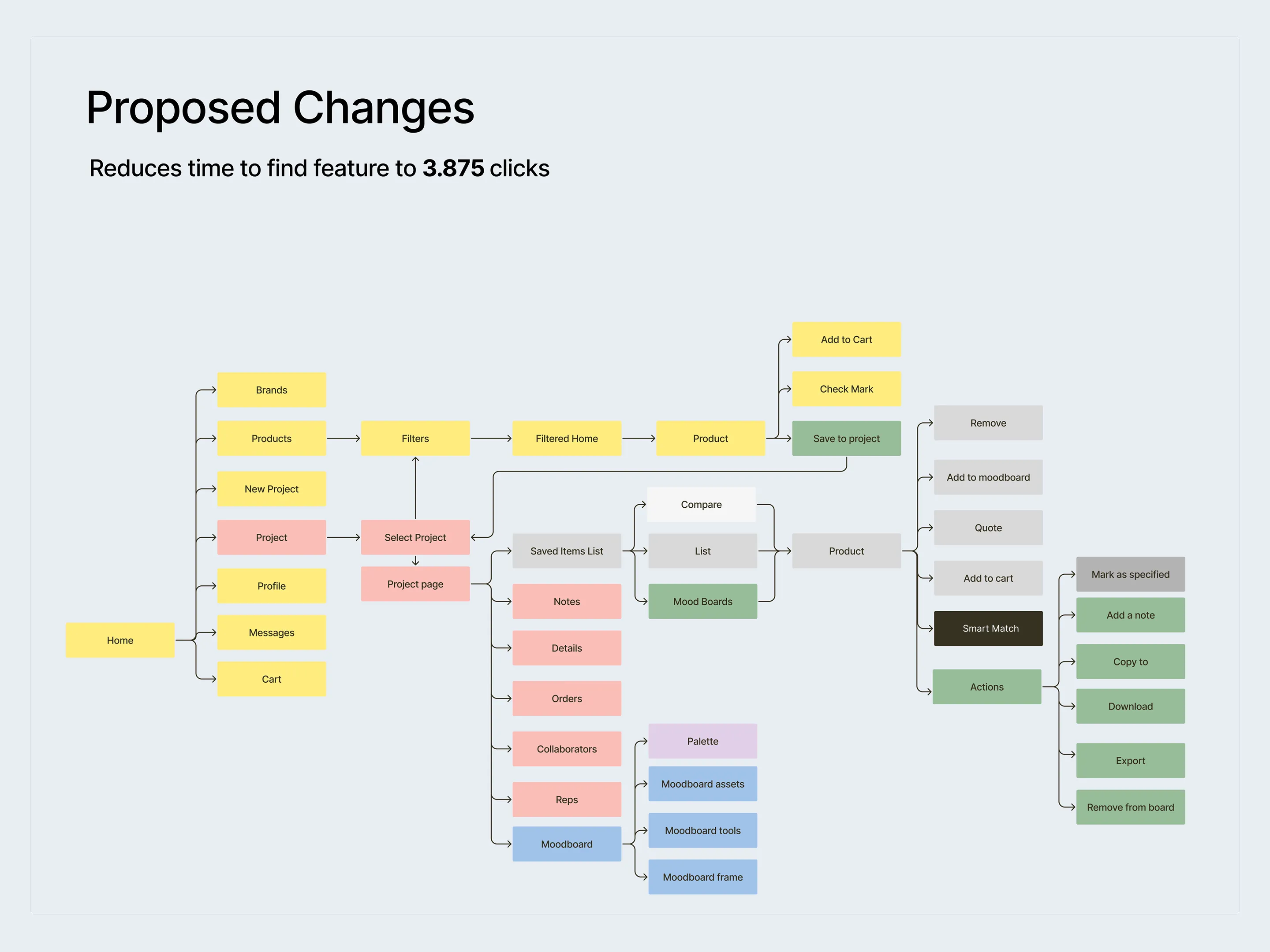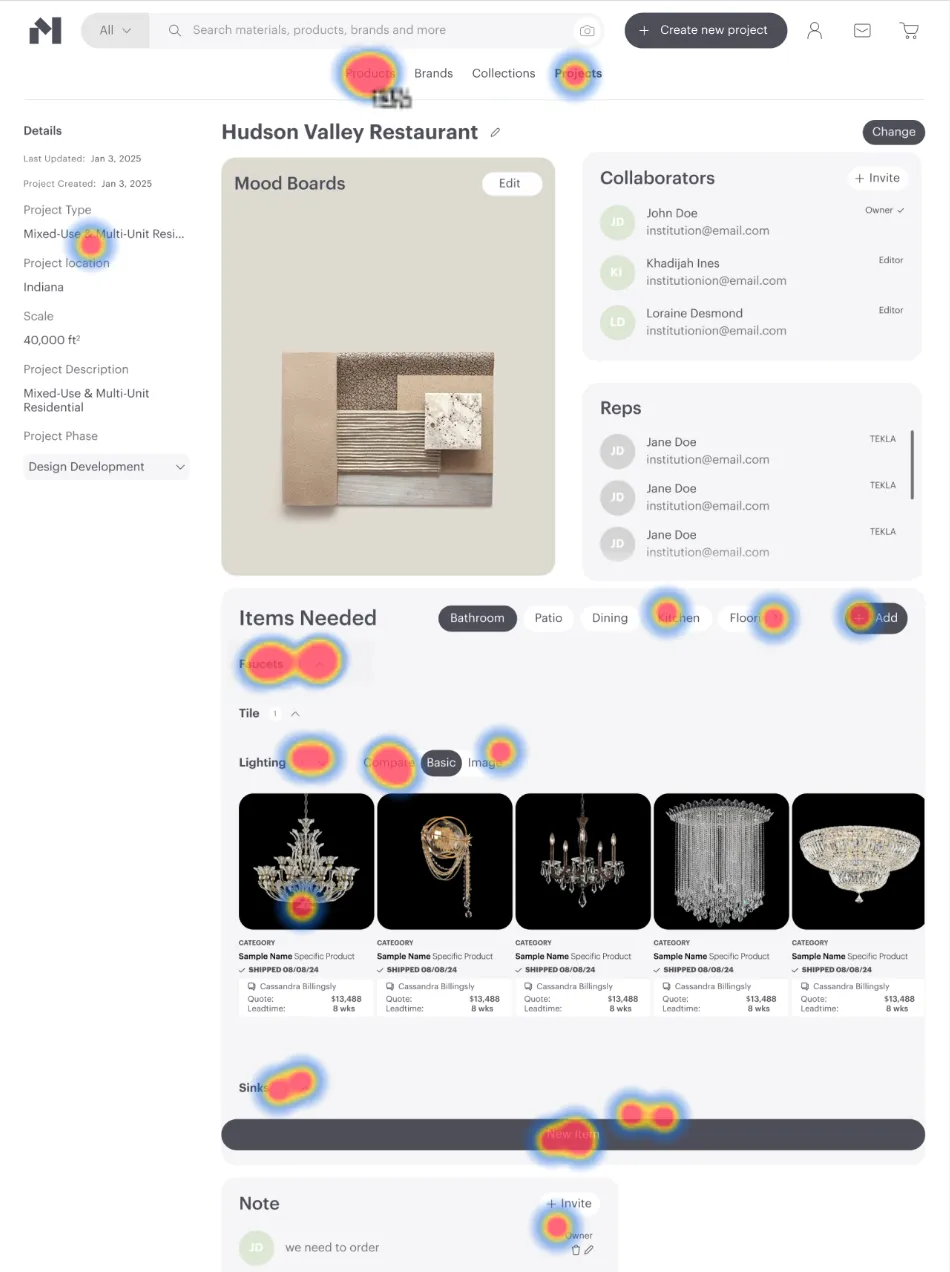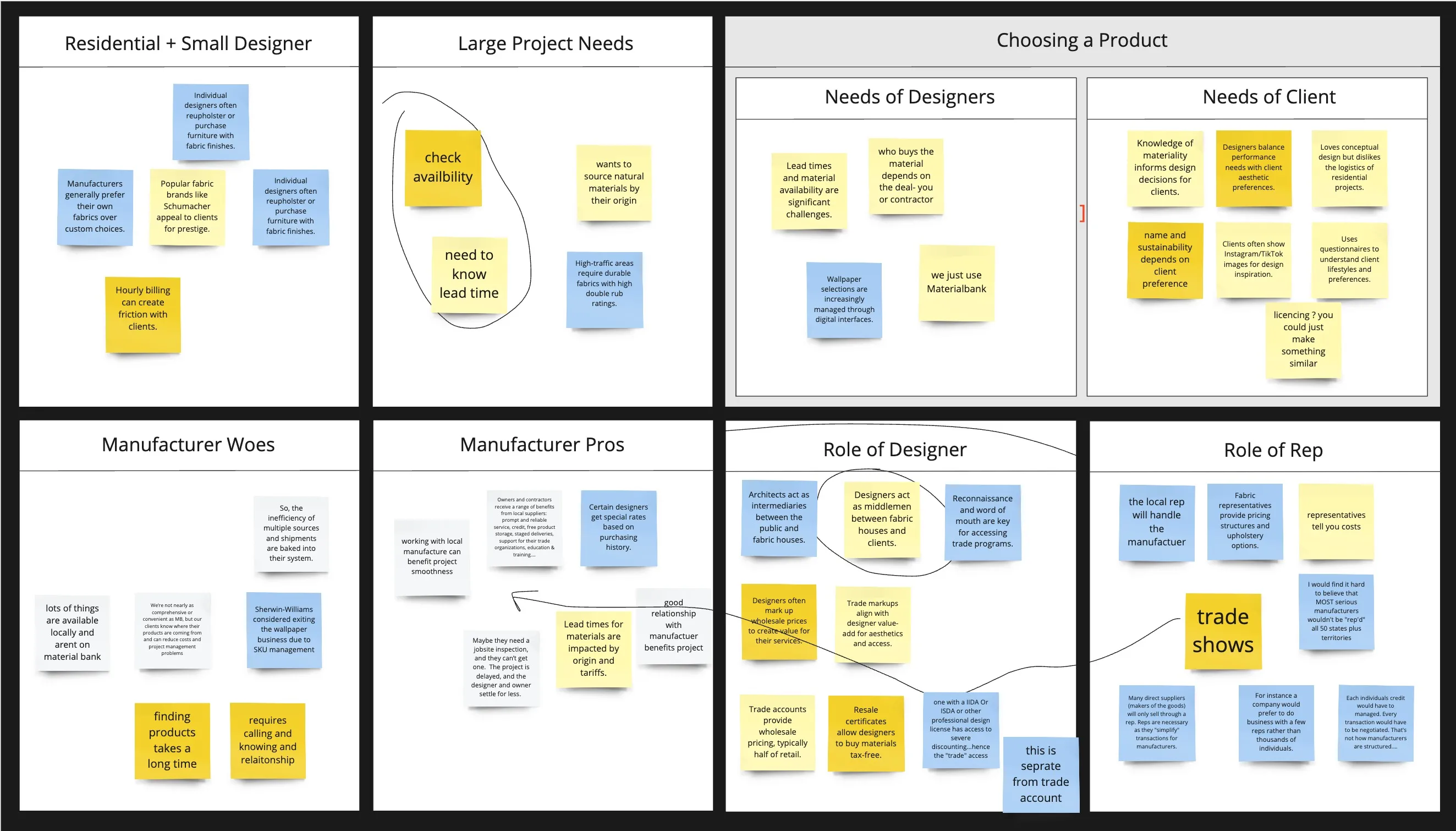
We began by interviewing designers about their fabric sourcing process and workflow pain points. Through this, we uncovered that Material Bank’s strongest tools often caused confusion instead of clarity.
Competitive Audit
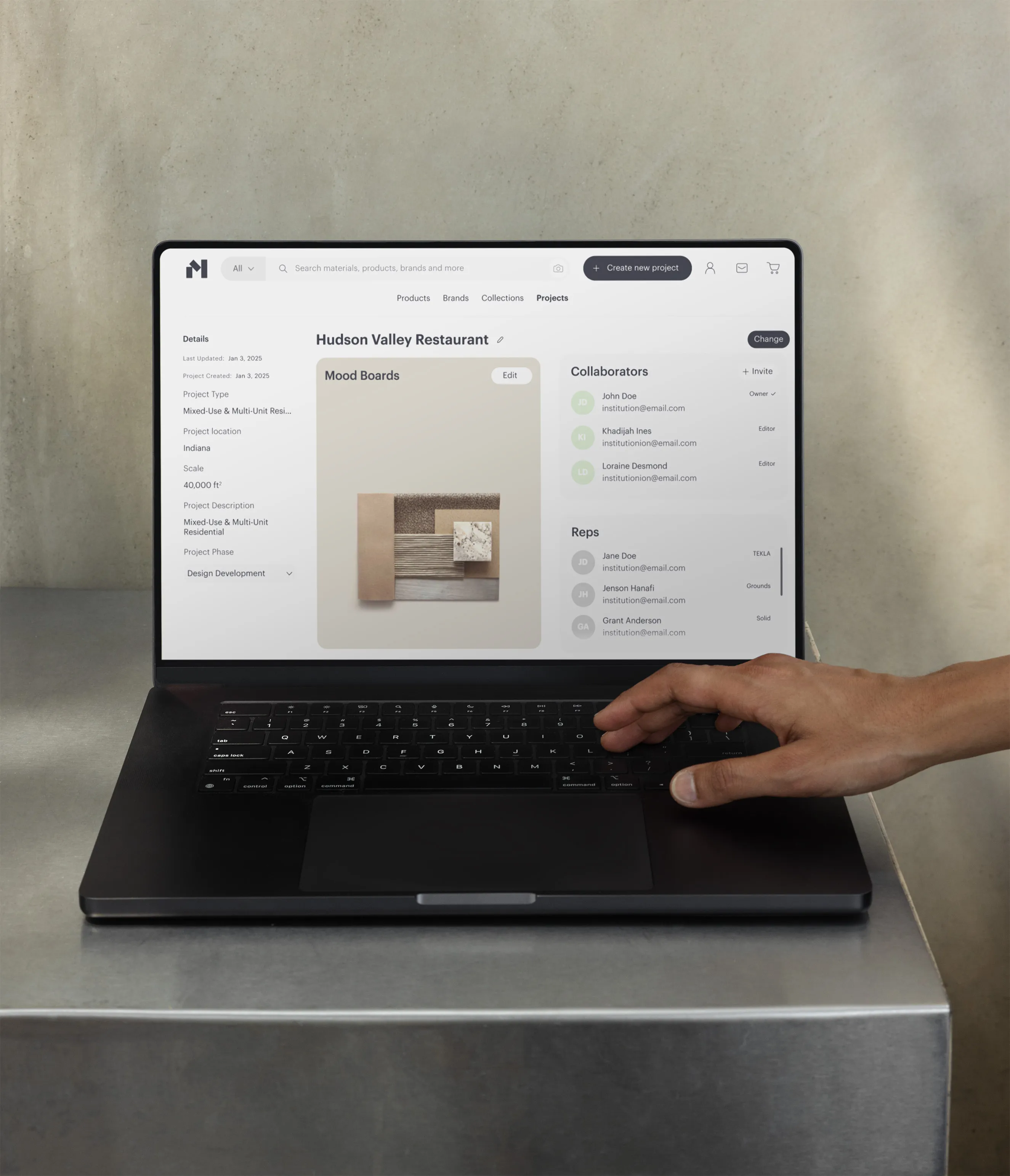
Digital Moodboarding
A competitor’s digital moodboarding feature caters to architectural and interior workflows—helping designers visualize materials in context and communicate spatial intent before committing to samples.
Without Material Banks built in shopping this is less of a journey.
Secondary Research
Supply chain obscurity undermines sustainability goals
Many Material Bank partners are regional importers who rebrand products, obscuring their origins. This practice often results in designers specifying materials from distant suppliers—even when identical options are available locally—leading to unnecessary shipping, costs, and environmental impact.
Source
Secondary Research
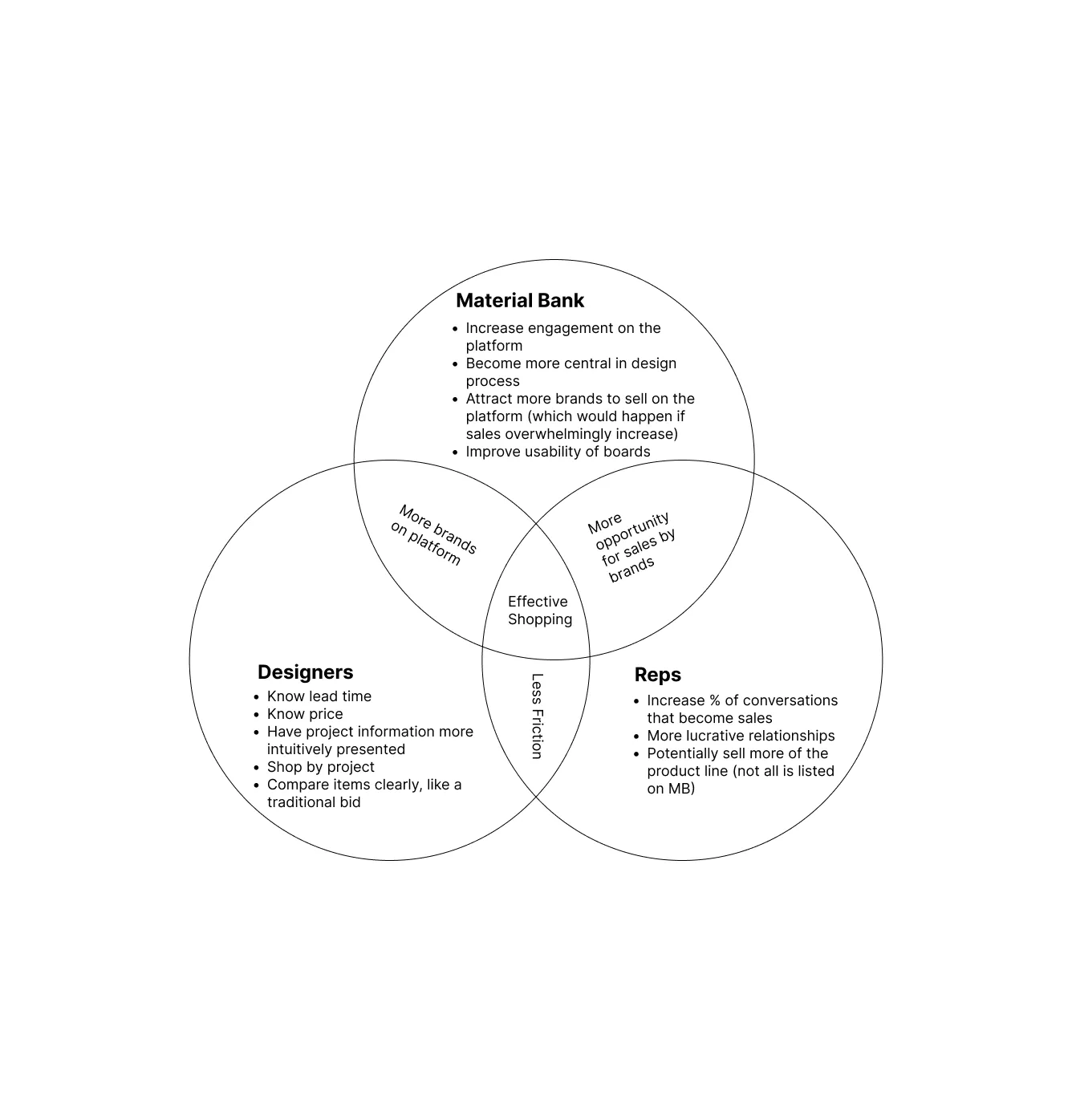
Representatives are central to the process.
Interfacing between designer and factory/supplier is only done by people on Material Bank. This mimics the traditional industry and provides opportunity for enrichment.
The interviews aimed to understand how people source fabric for upholstery projects. By keeping the conversations open-ended, I uncovered key limitations with Material Bank, the primary marketplace for design professionals.
4/6 Designers
Designers agreed that lead time is the most crucial detail in selecting a material.
2/6 People
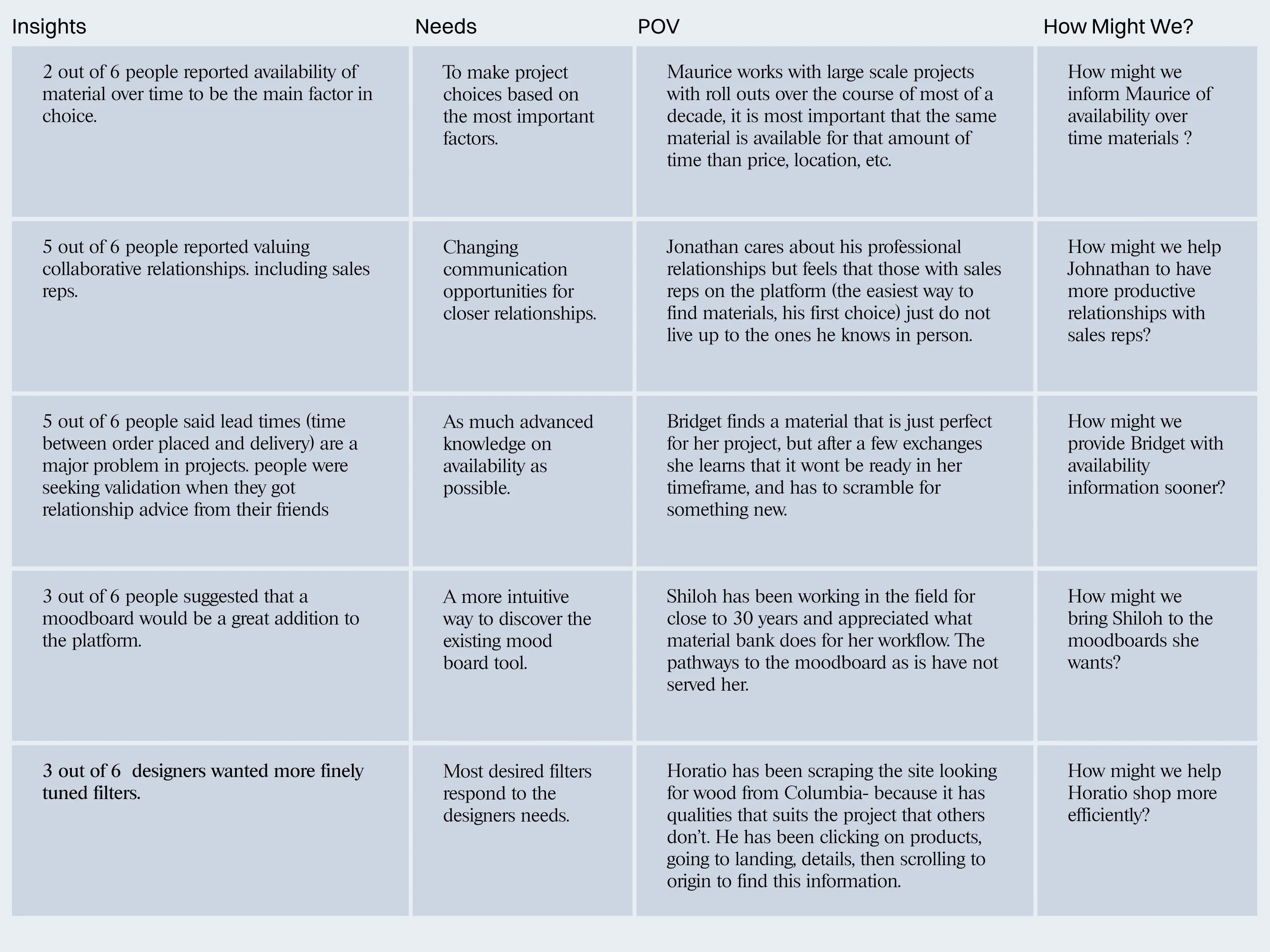
People reported availability of material over time to be the main factor in choice.
This was particularly important in projects with multiple locations built over a wide span of years.
3/6 Users
People suggested that a moodboard would be a great addition to the platform.
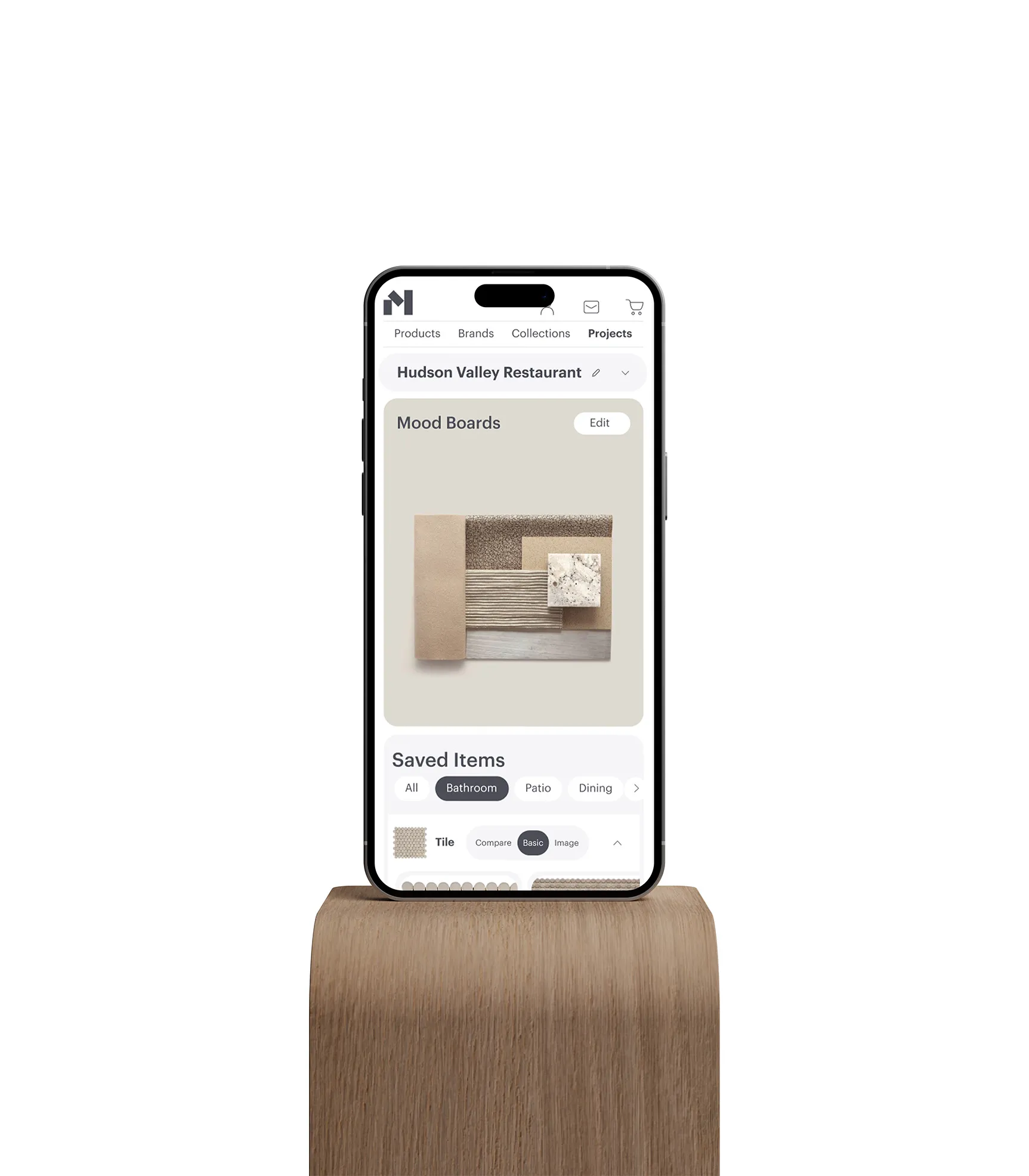
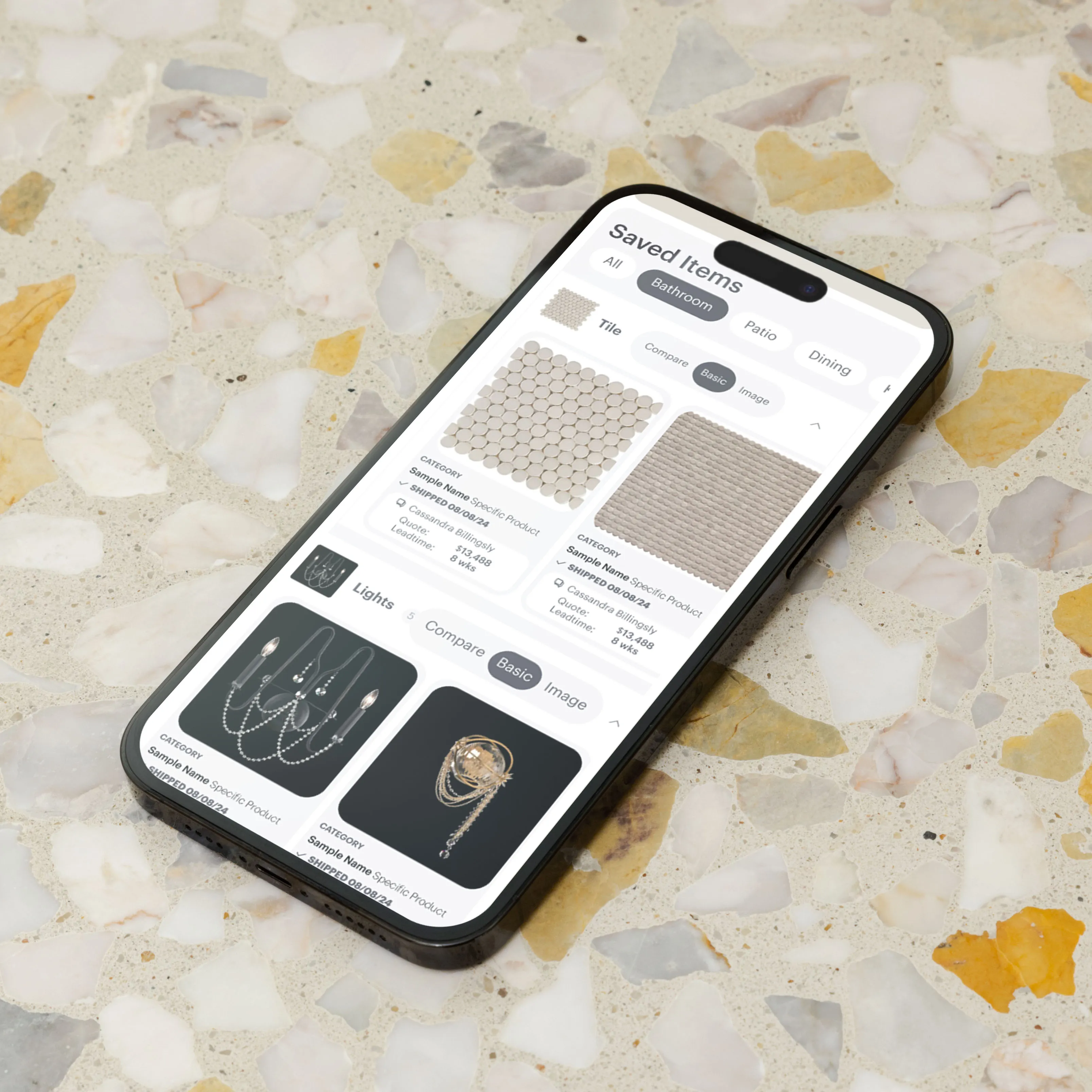
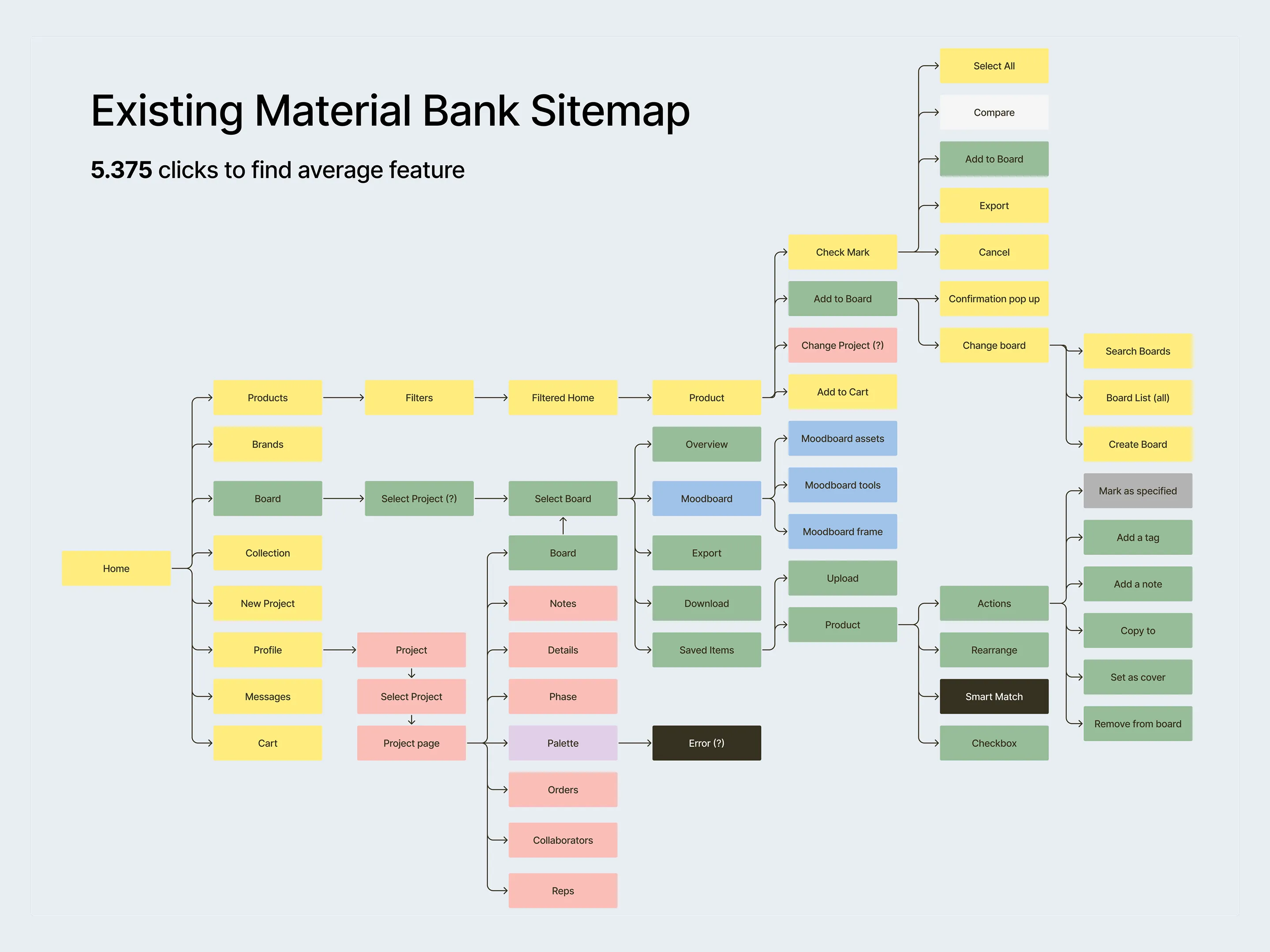
Material Bank already has a robust and feature-rich moodboard. The lack of awareness of this feature is the first signal of the most important issue.
5/6 People
Valued the collaborative relationships they had: including with sales reps. Experienced designers missed the personal connections and energy of physical Material Libraries, while younger designers felt a loss of networking opportunities.
3/6 Participants
participants wanted Material Bank to offer a mood board tool they have one already
"I wish there was ... a more visual interface. That would help me see everything in context."
5/6 Designers
designers appreciate the value of a collaborative team environment.
This includes sales representatives and their team.
Material Bank values sales representatives on their site, but even so the nature of the relationships has changed.
Articulating insights into human needs revealed the underlying motivations shaping how designers source and collaborate

A POV HMW Diagram based on the interviews
The synthesis resulted in personas of designers and reps in different parts of their careers. They are divided by the amount of time they have spent in the field and the way that filters their relationship with reps, resourcing, and collaborating.